Key Takeaways
- SAP ERP software integrates core business processes for better visibility and efficiency in SMEs.
- Choosing the right ERP Software SAP involves assessing scalability, integration, and support needs.
- ERP solutions simplify finance, sales, and inventory management by connecting disparate business functions.
- Understanding the cost of SAP ERP requires defining your specific project scope and requirements.
- SAP ERP software connects core business processes for better operational visibility and decision-making in SMEs.
Synobiz Systems is a Leading ERP Consulting and Digital Transformation Company.
As a business grows, managing finance, sales, purchasing, inventory, production, and customer information through disconnected systems can become difficult. Teams may spend too much time reconciling data instead of using it to make decisions.
That is where ERP software becomes useful. An ERP platform brings key business processes into a connected environment, helping organizations maintain better visibility across operations. SAP describes ERP as software that integrates core business processes and provides a unified view of organizational information.
For small and midsized enterprises, the right ERP Software SAP solution can provide a structured foundation for managing today's operations while supporting future growth.
What Is SAP ERP Software?
SAP ERP software refers to SAP's enterprise resource planning solutions for managing core business processes such as finance, procurement, supply chain, sales, manufacturing, and other operational functions.
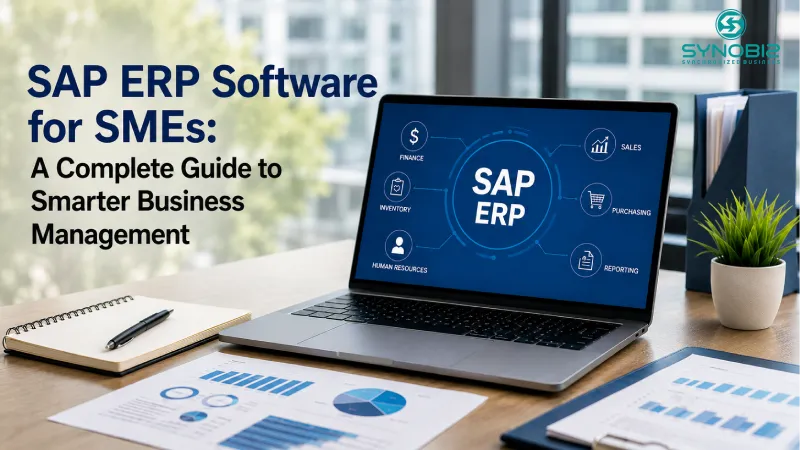
SAP offers ERP solutions for different business sizes and requirements. For SMEs and growing organizations, SAP Business One is specifically positioned as an integrated ERP solution covering areas such as finance, sales, purchasing, inventory, production, and reporting.
The important point is that ERP is not simply accounting software with additional features. A properly designed ERP environment connects different business functions so teams can work with more consistent information.
Why SMEs Need ERP Tools and Software
Many growing businesses begin with spreadsheets, standalone accounting systems, or department-specific applications. These may work for a period, but growing transaction volumes and operational complexity can make disconnected systems harder to manage.
Modern ERP Tools and Software can help businesses address common challenges such as:
- Duplicate or inconsistent data
- Limited visibility across departments
- Manual reporting
- Delayed approvals
- Difficult inventory tracking
- Disconnected purchasing and sales workflows
- Limited management visibility
SAP notes that ERP can help small businesses move beyond spreadsheets by connecting areas such as sales, customer relationships, finance, and operations.
Key Functions of SAP ERP for SMEs
A strong ERP implementation should support the processes that matter most to the business.
- Financial Management : ERP can connect accounting transactions with sales, purchasing, inventory, banking, budgeting, and financial reporting. This creates a more connected view of financial activity.
- Sales and Customer Management : Sales orders, customer information, quotations, deliveries, and invoices can be managed through connected processes instead of separate systems.
- Purchasing and Inventory : Businesses can link purchasing activity with inventory requirements and sales operations. This can provide better visibility into stock movements and procurement workflows.
- Production and Operations : Manufacturing organizations can use ERP capabilities to coordinate production-related processes, material requirements, inventory, and financial information.
- Reporting and Analytics : Integrated information can make management reporting more useful because decision-makers have access to data from connected business processes.
ERP Small Business Software: What Should You Look For?
Choosing ERP Small Business Software requires more than comparing a feature list. The solution should match the company's size, industry, processes, user requirements, and growth plans.
Before selecting a platform, consider:
- Business processes: Which departments need to be connected?
- Scalability: Can the system support increasing users, transactions, and locations?
- Integration: Can it connect with existing applications and third-party systems?
- Reporting: Does management get the information needed for decisions?
- Customization: What genuinely needs modification, and what can remain standard?
- Support: What implementation and post-go-live assistance is available?
- Data migration: How will existing customer, supplier, inventory, and financial data be handled?
At Synobiz Systems, our ERP approach begins with business assessment and solution design before implementation. Our published methodology includes business assessment, ERP selection, solution design, implementation, integration, go-live, support, and optimization.
Understanding SAP ERP Software Price
One of the most common search queries is SAP ERP Software Price. However, a single figure cannot accurately represent every ERP project.
The overall commercial scope can vary according to:
- Number of users
- Selected SAP product
- Deployment model
- Functional requirements
- Integrations
- Customizations
- Data migration
- Training
- Support and maintenance
For that reason, businesses researching the Cost of SAP Software should first define their requirements and project scope. A professional ERP consultation can produce a more meaningful estimate than selecting a solution based only on a generic number.
The objective should be to understand the complete project scope rather than focusing on software acquisition alone.
SAP ERP Audit Services for Existing Systems
ERP performance should also be reviewed after implementation.
SAP ERP Audit Services can help organizations assess whether their ERP environment is being used effectively, identify performance or process gaps, review controls, and find opportunities for optimization.
Synobiz Systems lists ERP Audit Services as part of its consulting portfolio, with activities including performance review, compliance checks, and ROI reporting.
An ERP audit can be particularly useful when users report process difficulties, reports are inconsistent, workflows have become complicated, or the business has changed significantly since the original implementation.
Why Choose Us
At Synobiz Systems, we help businesses evaluate, implement, integrate, optimize, and support ERP solutions around their actual operating requirements. Our services include ERP implementation, strategic consulting, integration, data management, upgrades and migration, training, and ERP audit services. We work with solutions including SAP Business One, SAP S/4HANA, Microsoft Dynamics, Odoo, and ERPNext, giving businesses a broader technology perspective when selecting an appropriate platform. Our focus is on connecting business processes, improving visibility, and building an ERP environment that can support long-term operational growth.
Conclusion
SAP ERP software can give SMEs a more structured way to manage finance, sales, purchasing, inventory, production, reporting, and other connected business activities. The real value comes from selecting the right platform and implementing it around the company's actual processes. Businesses researching ERP Software SAP should consider functionality, integration, scalability, data migration, support, and future requirements rather than focusing on software selection alone. Similarly, searches for SAP ERP Software Price or Cost of SAP Software should be approached through a complete project scope because ERP investment varies by business needs. With proper planning, ERP can become a practical foundation for better visibility, control, and smarter business management.
Looking for the right ERP solution for your growing business? Contact Synobiz Systems at +91 97247 99092 or email info@synobiz.com for ERP consultation, implementation, and support.
Frequently Asked Questions
SAP ERP software refers to the enterprise resource planning solutions provided by SAP for managing core business processes like finance, sales, and inventory. For SMEs, SAP ERP offers a structured approach to connect various departments, leading to improved visibility and efficiency across operations.
Small and midsized enterprises often start with disconnected systems like spreadsheets or standalone applications. As they grow, these systems can lead to inconsistencies and inefficiencies, making modern ERP tools essential for streamlining operations and improving data accuracy.
SAP ERP provides several key functions for SMEs, including financial management, sales and customer management, purchasing and inventory control, and production operations. These interconnected processes allow for a unified view of business operations, helping SMEs make informed decisions.
Choosing the right ERP software requires evaluating your business processes, scalability requirements, and how well the solution integrates with existing systems. Additionally, consider customization needs and the support available during and after implementation for best results.
The cost of SAP ERP software varies based on factors like the number of users, deployment model, customizations, and integration needs. It's essential for businesses to define their specific requirements and project scope to get a meaningful estimate rather than relying on generic pricing.