Key Takeaways
- SAP ERP minimizes production delays by integrating demand and inventory data for accurate planning.
- Improve inventory accuracy with SAP Software to prevent mismatches and enhance operational efficiency.
- Streamline purchasing, inventory, and production communication through a connected SAP System.
- Evaluate your SAP Software Price against essential capabilities for successful implementation in manufacturing.
- Track ERP ROI with key performance indicators like production schedule adherence and order fulfillment delays.
Synobiz Systems Pvt. Ltd. is a leading provider of SAP ERP implementation and consulting services for manufacturing businesses in India. Is your production team waiting for materials that your inventory system shows as available? Or are customer deliveries getting delayed because purchasing, warehouse, and production teams aren't working with the same information? These problems can quickly disrupt manufacturing operations. With the right SAP Software, we help bring your processes together so your team can plan production, track inventory, and make better decisions.
Why Do Production Delays and Inventory Mismatches Happen?
Production delays don't always begin on the factory floor. Sometimes, the problem starts with incorrect stock records, outdated bills of materials, or purchasing teams receiving information too late.
Imagine planning a production order based on available stock, only to discover that some components have already been used elsewhere. Your team now needs to arrange materials, adjust schedules, and inform customers about possible delays.
These are common challenges when departments rely on disconnected applications.
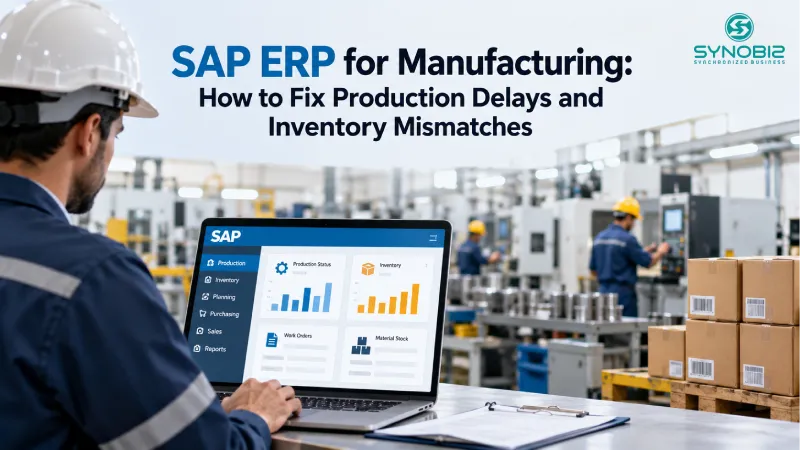
An integrated SAP System helps connect purchasing, inventory, production, and sales information, giving teams a clearer picture of what's happening across operations.
How Does SAP ERP Improve Production Planning?
Manufacturers need to know what to produce, which materials are required, and whether those materials will be available when production begins.
SAP ERP helps connect demand, material requirements, and manufacturing activities, reducing the need to coordinate everything through separate spreadsheets.
For businesses using SAP Business One, production orders, bills of materials, and material requirements planning support more structured manufacturing processes.
The key improvements include:
- Better material planning: Identify component requirements before releasing production orders.
- Clearer production tracking: Monitor planned quantities, material consumption, and completed goods.
- Improved purchasing coordination: Connect procurement activities with manufacturing requirements.
- More reliable scheduling: Use updated inventory and demand information when planning production.
- Better operational visibility: Give relevant teams access to connected manufacturing information.
At Synobiz Systems Pvt. Ltd., we help manufacturers configure these processes around their existing workflows rather than adding unnecessary complexity.
Reduce Inventory Mismatches Before They Affect Production
Inventory problems often arise when physical stock movements aren't recorded correctly.
Materials may be transferred between warehouses, issued to production, or received from suppliers without timely updates. As a result, the available quantities shown in the system may differ from actual stock.
Accurate inventory records make production planning more dependable.
With SAP Business One inventory management, businesses can record goods receipts, goods issues, inventory transfers, and stock counts within a connected environment.
We help manufacturers define clear inventory procedures so warehouse and production teams can work with more consistent information.
This makes it easier to identify shortages, investigate stock differences, and avoid planning manufacturing activities around inaccurate quantities.
Connect Production, Inventory and Purchasing in One System
Fixing manufacturing delays requires more than improving one department. Purchasing, stores, and production must work with consistent information.
Consider the difference between disconnected operations and a connected ERP workflow:
| Manufacturing Challenge | With SAP ERP |
|---|---|
| Materials unavailable during production | Material requirements checked during planning |
| Inventory records don't match physical stock | Structured stock transactions and inventory counts |
| Purchasing receives requirements late | Procurement aligned with production demand |
| Production progress is difficult to track | Production orders and material consumption records |
| Reports require manual consolidation | Connected operational reporting |
The biggest benefit is improved coordination. Instead of waiting for updates from different departments, employees can access relevant information from a shared business system.
What Should Manufacturers Consider Before SAP Implementation?
Choosing ERP software involves more than comparing features. Your existing processes, production requirements, employee responsibilities, and integration needs all matter.
While researching SAP Software Price, manufacturers should first identify which capabilities are essential for their operations.
Similarly, searches for SAP Cost in India or SAP Business One Pricing should lead to a detailed discussion about implementation scope, user requirements, deployment preferences, customization, and ongoing support.
Businesses exploring an SAP Trial or product demonstration should also evaluate realistic manufacturing scenarios, such as material shortages, production orders, and inventory transfers.
A practical evaluation helps determine whether the proposed solution supports everyday manufacturing requirements.
How Can Manufacturers Measure ERP ROI?
A successful ERP implementation should make daily operations easier to manage and provide a measurable improvement in business processes.
Instead of focusing only on software deployment, manufacturers should monitor ERP ROI through operational indicators that reflect their actual challenges.
Useful measurements include production schedule adherence, inventory variance, material shortage frequency, order fulfillment delays, and time spent preparing operational reports.
At Synobiz Systems Pvt. Ltd., we help businesses identify these priorities during implementation planning.
The goal is not simply to introduce another system, but to improve how manufacturing teams work together.
Tracking performance before and after implementation can help businesses evaluate progress and identify areas needing further optimization.
Why Choose Us
At Synobiz Systems Pvt. Ltd., we understand that manufacturing businesses need practical solutions, not complicated processes. Our team helps you connect production planning, purchasing, inventory, and financial operations through tailored SAP implementation services. From understanding your existing challenges to system configuration, data migration, integration, and employee training, we work closely with your team throughout the project. We focus on building reliable workflows that support better visibility, smoother coordination, and everyday manufacturing requirements.
Conclusion
Production delays and inventory mismatches can create problems across your entire manufacturing operation. When material availability, purchasing activities, and production schedules are managed separately, even small errors can lead to bigger disruptions.
SAP ERP helps manufacturers connect these processes, improve inventory visibility, and plan production using more consistent information.
However, the right configuration, accurate business data, and employee adoption are equally important.
With a well-planned ERP implementation, manufacturers can reduce manual coordination, identify operational gaps earlier, and build more dependable production processes. The right approach starts with understanding where delays occur and choosing technology that addresses those challenges.
Are production delays and inventory mismatches holding your manufacturing business back?
Connect with our SAP consultants to discuss your production planning challenges, inventory requirements, and ERP implementation goals.
Call Us: +91 97247 99092
Email: info@synobiz.com
Get in touch today and take the next step toward better-connected manufacturing operations.
Frequently Asked Questions
Production delays can occur due to incorrect stock records, outdated bills of materials, or lack of timely information transfer between departments. Often, reliance on disconnected applications leads to uncoordinated operations, disrupting the manufacturing flow.
SAP ERP improves inventory management by providing accurate records of goods receipts, issues, transfers, and stock counts within an integrated system. This helps align physical stock movements with system data, reducing discrepancies and enhancing production planning.
When researching SAP Software Price, it's essential to understand your specific operational needs, required features, and implementation scope. This includes evaluating user requirements, deployment preferences, and necessary customization for your manufacturing processes.
SAP ERP enhances production planning by connecting demand, material requirements, and manufacturing activities into a unified system. This allows for better material planning, clearer production tracking, and more reliable scheduling, ultimately streamlining the manufacturing process.
Measuring the ROI of SAP ERP implementation involves tracking operational indicators such as inventory variance, production schedule adherence, and order fulfillment delays. By monitoring these metrics, manufacturers can assess the effectiveness of the ERP system and identify areas for further improvement.